
2025–26 Annual Report
Safe Canadians, Secure Economy

On this page
Message from the interim Director and CEO
I am pleased to share the impressive results that FINTRAC achieved in 2025–26 as part of Canada's Anti-Money Laundering and Anti-Terrorist Financing Regime. These results helped to protect the safety of Canadians, the security of Canadian businesses and the integrity of Canada's financial system.
Over the past year, FINTRAC made critical contributions to broader national priorities centred on fighting financial crime and protecting vulnerable Canadians. The Centre played a central role, for example, in supporting the Government of Canada's focus on targeting and disrupting extortion, a serious criminal activity that threatens Canadians and Canadian businesses and generates substantial profits for organized crime that are often laundered through the financial system.
Throughout 2025–26, FINTRAC generated 122 disclosures of actionable financial intelligence in support of law enforcement investigations of extortion across Canada. These disclosures identified 336 subjects of interest and provided police with detailed intelligence on criminal networks, financial flows and emerging extortion methods used by organized crime groups.
In this same timeframe, FINTRAC's financial intelligence officers engaged over 350 law enforcement officers across five provinces to provide strategic insights and indicators related to extortion and to assist police in leveraging the Centre's financial intelligence to advance their investigations.
As part of a Countering Extortion Partnership with the private sector, FINTRAC also developed a new Targeted Indicator Profile, including tailored indicators and strategic intelligence related to extortion, for use by all major Canadian banks and larger credit unions and caisses populaires. In addition, working with industry and law enforcement, the Centre produced a Special Bulletin on money laundering associated with extortion directed at Canada's South Asian diaspora to help businesses detect proceeds generated by criminals extorting South Asian diaspora communities and report suspicious transactions to FINTRAC.
Beyond extortion, FINTRAC continued to surge its support to the federal government's fight against illegal fentanyl. Last year, the Centre established a rapid intelligence production team to prioritize the disclosure of actionable financial intelligence related to illicit opioids and transnational criminal organizations. In total, FINTRAC generated 268 financial intelligence disclosures in support of law enforcement investigations related to illegal fentanyl. We also worked closely with the RCMP's Joint Intelligence Operational Cell, Canada's Fentanyl Czar and our international allies, most notably the Financial Crimes Enforcement Network (FinCEN) in the United States and the Unidad de Inteligencia Financiera in Mexico.
Over the past year, FINTRAC continued to play a crucial role in combatting human trafficking for sexual exploitation and labour trafficking as part of the Government of Canada's National Strategy to Combat Human Trafficking. In 2025–26, the Centre's intelligence identified more than 500 subjects of interest and supported 17 project-level investigations.
In October 2025, the Halton Regional Police Service recognized FINTRAC's assistance following a lengthy human trafficking investigation. Police alleged that two individuals were using physical violence and psychological harm to control and traffic multiple young women in the Greater Toronto Area for their own financial benefit. The individuals were charged with, among other crimes, assault, sexual assault and human trafficking.
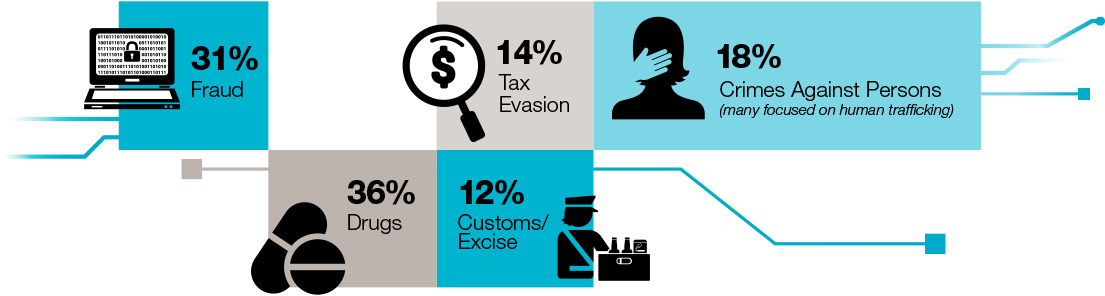
FINTRAC was also active in helping to target and disrupt the increasing threat to Canadians and Canadian businesses posed by fraud. More than 31% of the Centre's financial intelligence disclosures last year identified fraud as the predicate criminal offence, including cyber-enabled and cryptocurrency fraud. With its ever-growing impact on Canadians, fraud will remain a priority focus for FINTRAC. This includes supporting Canada's first-ever whole-of-government National Anti-Fraud Strategy and the work of Canada's future Financial Crimes Agency.
In total, FINTRAC generated 7,214 financial intelligence disclosure packages, based on 3,007 unique disclosures last year, the largest number of disclosures that the Centre has generated in a single year. In total, these disclosures contained 1,678,230 financial transactions. The value of our intelligence was recognized by police when announcing charges in 30 separate cases, a number of which are highlighted in this report. I was also pleased to see that 97% of the feedback that we received from Canada's law enforcement and national security agencies indicated that our financial intelligence was actionable, including providing new leads, triggering new avenues of investigation or corroborating existing investigative information.
In addition to delivering on FINTRAC's financial intelligence mandate, the Centre focused on assessing and enforcing the obligations that businesses have under the Proceeds of Crime (Money Laundering) and Terrorist Financing Act. These obligations help to deter criminals and terrorists from operating within the legitimate economy. They also ensure that FINTRAC receives the information needed to generate actionable financial intelligence in support of law enforcement and national security investigations.
FINTRAC is committed to working with businesses to help them understand their obligations and are aware of emerging threats and broader national priorities related to fighting financial crime. Over the past year, the Centre published new guidance to explain legislative and regulatory changes and shared strategic intelligence related to money laundering associated with extortion, child exploitation and sanctions evasion. FINTRAC also created new digital campaigns to highlight and explain new and existing obligations and introduced Industry Day, a virtual engagement with thousands of stakeholders designed to foster dialogue, share key updates and support businesses in meeting their obligations.
To ensure that businesses are doing their part in helping to protect Canadians and Canada's financial system, the Centre undertook thousands of assessment and monitoring activities last year, including conducting Supervisory Risk and Assessment Questionnaires, assessing self-attestations, engaging entities that submitted Voluntary Self-declarations of Non-compliance, undertaking monitoring meetings, and conducting both targeted and full scope compliance examinations.
When FINTRAC found non-compliance with the Act and Regulations, the Centre took firm action. For example, FINTRAC revoked the registrations of 82 money services businesses in 2025–26, up from 12 the previous year, for failing to respond to clarification requests or demands for information. This information, including crypto wallet addresses, is crucial to our ability to ensure and enforce compliance and track the proceeds of crime across jurisdictions.
Over the past year, FINTRAC also issued 35 notices of violation, up 52% from the previous year, for more than $247 million, by far the largest amount in FINTRAC's history. In addition, the Centre also disclosed 31 cases of non-compliance to law enforcement for potential criminal investigation.
With the passage of the Strengthening Canada's Immigration System and Borders Act in March 2026, the Government of Canada increased the size of the Centre's penalties by up to 40 times the current amounts, making it clear that businesses will not be allowed to treat non-compliance as a cost of doing business. It also provided FINTRAC with the authority to issue Compliance Orders when businesses fail to address their violations. These orders will be made public and failure to comply with them can result in a penalty of up to $30 million or 3% of the business's global revenues. FINTRAC is now strengthening its administrative monetary penalties framework to implement these changes.
Going forward, we are focused on building on the tremendous foundation that has been established at FINTRAC during its first 25 years of operations. It is an organization of dedicated and capable professionals at the heart of the Government of Canada's focus on combatting financial crime and protecting Canadians.
Stéphane Sirard
Interim Director and Chief Executive Officer
April 2025, FINTRAC's financial intelligence was recognized by the Alberta Law Enforcement Response Teams (ALERT) in Project Glacier, an extensive organized crime investigation where six suspects were charged with 22 criminal offences. ALERT seized over a quarter million dollars' worth of drugs during the investigation, including illegal opioid pills.

FINTRAC's mandate
The Financial Transactions and Reports Analysis Centre of Canada (FINTRAC) is one of 13 federal departments and agencies that play a role in Canada's Anti-Money Laundering and Anti-Terrorist Financing Regime, which is led by the Department of Finance Canada. As Canada's Financial Intelligence Unit and Anti-Money Laundering and Anti-Terrorist Financing Supervisor, the Centre helps to combat money laundering, terrorist activity financing, sanctions evasion and threats to the security of Canada.
The Centre generates actionable financial intelligence in support of investigations by Canada's law enforcement, national security agencies and other domestic and foreign agencies in relation to these threats. FINTRAC also produces valuable strategic financial intelligence, including specialized research reports and trends analysis, for regime partners and policy decision-makers, businesses and international counterparts. This strategic financial intelligence shines a light on the nature, scope and threat posed by money laundering, terrorist financing, sanctions evasion and threats to the security of Canada.
The Centre is able to fulfill its financial intelligence mandate by working with Canadian businesses to ensure compliance with the Proceeds of Crime (Money Laundering) and Terrorist Financing Act (the Act) and associated Regulations. Compliance with the Act helps to prevent, detect and deter criminals from using Canada's economy to launder the proceeds of their crimes or to finance terrorist activities. It also ensures that FINTRAC receives the information it needs to generate financial intelligence for Canada's law enforcement and national security agencies.
In fulfilling its core financial intelligence and supervision mandates, FINTRAC is committed to safeguarding the information that it receives and discloses to Canada's law enforcement and national security agencies. The protection of privacy is critical to maintaining Canadians' confidence in FINTRAC and Canada's broader Anti-Money Laundering and Anti-Terrorist Financing Regime.
In April 2025, FINTRAC's financial intelligence was recognized by the Ontario Securities Commission in an investigation where three individuals were charged with fraud. The accused allegedly raised more than $11 million from investors between November 2020 and August 2023, which was used to repay existing investors and diverted to the benefit of one of the accused.


What is money laundering?
Money laundering is the process used to disguise the source of money or assets derived from criminal activity. There are three recognized stages in the money laundering process:
- Placement involves placing the proceeds of crime in the financial system.
- Layering involves converting the proceeds of crime into another form and creating complex layers of financial transactions to disguise the trail and the source and ownership of funds. This stage may involve transactions such as the buying and selling of stocks, commodities or property.
- Integration involves placing the laundered proceeds back into the economy to create the perception of legitimacy.
The money laundering process is continuous, with new 'dirty' money constantly being introduced into the financial system.

What is terrorist activity financing?
Terrorist activity financing is the use of funds, property or other services to encourage, plan, assist or engage in acts of terrorism, where the primary motivation is not financial gain.
Two main differences distinguish terrorist activity financing from money laundering:
- Funds can be from legitimate sources, not just criminal acts.
- Money is the means, not the end— the goal is to use funds to facilitate or implement terrorist activities.

What is sanctions evasion?
Sanctions evasion is a violation of restrictions that have been established on activities between persons in Canada or Canadians outside Canada and foreign states, individuals, or entities. Sanctions can target specific countries, organizations or individuals and include restricting or prohibiting trade, financial transactions or other economic activity.
In April 2025, FINTRAC's financial intelligence was recognized by the Ontario Provincial Police in an investigation where one individual was charged with money laundering and fraud. The individual allegedly entered a bank and deposited a cheque for over $100,000. The money was then withdrawn prior to the banking establishment noticing that the cheque was fraudulent.

Protecting the safety of Canadians
As part of its core mandate, FINTRAC generates actionable financial intelligence for Canada's law enforcement and national security agencies, as well as other domestic and foreign agencies, to assist them in combatting money laundering, terrorist financing, sanctions evasion and threats to the security of Canada. The Centre's intelligence plays an important role in helping to protect the safety of Canadians, particularly Canada's most vulnerable citizens and communities.
In 2025–26, FINTRAC generated 7,214 financial intelligence disclosure packages, based on 3,007 unique disclosures, in support of investigations of money laundering, terrorist financing, sanctions evasion and threats to the security of Canada. This is the largest number of disclosures and disclosure packages that FINTRAC has generated in a single year. The Centre's financial intelligence has been critical to the success of increasingly large, sophisticated and cross-jurisdictional investigations.
Given the complexity of connecting the flow of illicit funds involving organized criminal groups, FINTRAC's financial intelligence often contains hundreds or even thousands of financial transaction reports in each disclosure. Over the past year, the Centre's unique disclosures contained 355,250 financial transaction reports, which included 1,678,230 financial transactions. This is up from 1,308,413 financial transactions last year.
In May 2025, FINTRAC's financial intelligence was recognized by the Royal Canadian Mounted Police in an investigation where an individual pleaded guilty to two terrorism-related charges. The individual admitted to raising over $15,000 through a crowdfunding platform and contributing over $35,000 to the benefit of Daesh, a listed terrorist organization. This was the largest terrorism financing conviction to date in Canada in terms of the monetary value.

| Disclosure type | Unique disclosures | Disclosure subjects | Reports in disclosures | Transactions in disclosures |
|---|---|---|---|---|
Voluntary information record instigated |
1,625 |
6,154 |
302,994 |
1,332,786 |
Foreign financial intelligence unit (FIU) query instigated |
110 |
312 |
19,042 |
73,626 |
Proactive from FINTRAC (to domestic and foreign FIU recipients) |
1,083 |
1,583 |
18,128 |
243,421 |
Foreign FIU information disclosed proactively and in response to a FINTRAC query |
189 |
2,601 |
15,086 |
28,397 |
| Total | 3,007 | 10,650 | 355,250 | 1,678,230 |
A financial intelligence disclosure is used by law enforcement to launch investigations, confirm existing information, identify links between individuals and businesses, and help refine the scope of their cases or shift their sights to different targets. The Centre's intelligence is often critical to putting together affidavits to obtain search warrants and production orders. A disclosure can pertain to an individual or a wider criminal network. FINTRAC's unique disclosures contained 10,650 subjects. This is up from 8,618 subjects last year.
Approximately 38% of the Centre's financial intelligence disclosures last year were provided proactively to Canada's law enforcement and national security agencies, which means the individuals or networks identified in the financial intelligence may not have been known to these agencies before FINTRAC's intelligence was received.
A financial intelligence disclosure can be related to money laundering, terrorist financing, sanctions evasion and threats to the security of Canada or to a combination of these illicit activities.
In February 2026, FINTRAC's financial intelligence was recognized by the Sûreté du Québec as part of Project RAFT, an investigation of fraud allegedly perpetrated against Revenu Québec and the Canada Revenue Agency. Complex financial schemes involving the use of corporate and trust structures led to the execution of search warrants and judicial restraint orders, resulting in the seizure of 13 properties, valued at over $13.5 million, which were considered proceeds of crime. This operation represented the largest real estate seizure and the most extensive judicial restraint order ever carried out by the Sûreté du Québec.
View text equivalent for the Project RAFT poster
This poster depicts the contribution that FINTRAC's financial intelligence made in Project RAFT.
Project RAFT is an investigation into a fraud case against Revenu Québec and the Canada Revenue Agency. Investigators from the Sûreté du Québec’s Economic Crimes Investigation Unit executed restraint orders to seize 13 properties considered proceeds of crime.
Details of the investigation
A large-scale joint criminal investigation led by the Sûreté du Québec, in collaboration with several police partners, targeted complex financial schemes involving the use of corporate and trust structures. The investigation led to the execution of search warrants and judicial restraint orders, resulting in: the seizure of 13 real estate properties valued at over $13.5 million and identified as proceeds or instruments of crime.
Through financial analysis and information sharing, investigators were able to trace the flow of funds and link the seized assets to the underlying criminal activities. This operation represents the largest real estate seizure and the most extensive judicial restraint order ever carried out by the Sûreté du Québec, highlighting the importance of criminal asset recovery as part of Project RAFT. The case also includes allegations of tax evasion against Revenu Québec and the Canada Revenue Agency.
Partners: Financial Transactions and Reports Analysis Centre of Canada, Sûreté du Québec, Service de police de la Ville de Montréal, Service de police de l'agglomération de Longueuil, Service de police de la Ville de Québec, Ottawa Police Service, Ontario Provincial Police
Quote from an Investigator, Sûreté du Québec: “Without FINTRAC, it would have been impossible to identify so many bank accounts and cryptocurrency accounts involved in our investigation or to execute so many criminal property restraints. Your agency is critical to our financial crime investigations, and the information you provided us in the RAFT case is invaluable.”
Quote from Louis-Philippe Ruel, Sûreté du Québec: “[This is] the largest seizure, or largest judicial restraint, by the Sûreté du Québec in its history to date.”
| 2023–24 | 2024–25 | 2025–26 | |
|---|---|---|---|
Money laundering |
1,571 |
2,297 |
2,640 |
Money laundering, terrorist financing and threats to the security of Canada |
122 |
211 |
195 |
Money laundering and sanctions evasion |
N/A 1 |
20 |
24 |
Money laundering, terrorist financing, threats to the security of Canada and sanctions evasion |
N/A 1 |
34 |
44 |
Terrorist financing and threats to the security of Canada |
90 |
163 |
95 |
Terrorist financing, threats to the security of Canada and sanctions evasion |
N/A 1 |
3 |
2 |
Sanctions evasion |
N/A 1 |
2 |
7 |
| Total | 1,783 |
2,730 |
3,007 |
In 2025–26, FINTRAC's financial intelligence was used in a wide variety of money laundering investigations where the origins of the suspected criminal proceeds were linked to extortion, drug trafficking, fraud, human trafficking, tax evasion, auto theft and other criminal offences. The Centre's financial intelligence disclosures were closely aligned with the high-risk predicate offences identified in the 2025 Assessment of Money Laundering and Terrorist Financing Risks in Canada.
Over the past year, FINTRAC provided dedicated support and actionable financial intelligence as part of the Government of Canada's broader focus on combatting extortion across the country. In 2025–26, FINTRAC generated 122 disclosures of actionable financial intelligence in support of law enforcement's extortion investigations. These disclosures included 75,204 financial transactions worth an estimated $1.6 billion in financial flows. In addition, they identified 336 subjects of interest and provided police with detailed intelligence on criminal networks, financial flows and emerging extortion methods used by organized crime groups.
In May 2025, FINTRAC's financial intelligence was recognized by the Canada Revenue Agency in an investigation where an individual pleaded guilty to willfully evading remittance tax and to making false statements in Goods and Services Tax (GST)/Harmonized Sales Tax (HST) returns. The investigation identified the evasion of $987,863 in net GST/HST that was owed.

| 2023–24 | 2024–25 | 2025–26Footnote* | |
|---|---|---|---|
Drugs |
23% |
20% |
36% |
Fraud |
20% |
25% |
31% |
Crimes against persons (many focused on human trafficking) |
7% |
16% |
18% |
Tax evasion |
10% |
12% |
14% |
Customs/Excise |
7% |
11% |
12% |
FINTRAC's financial intelligence officers also engaged over 350 law enforcement officers across five provinces to provide strategic insights and indicators related to extortion and to assist police in leveraging the Centre's financial intelligence to advance their investigations.
Throughout 2025–26, FINTRAC supported broader Government of Canada initiatives to combat illegal fentanyl and protect vulnerable communities. Building on the Centre's longstanding work related to Project Guardian, a public-private partnership aimed at combatting money laundering associated with illicit opioids, FINTRAC generated 268 financial intelligence disclosures in support of more than 40 project-level investigations targeting illegal fentanyl across Canada. In addition, as part of the broader national effort, the Centre provided expertise and support to the RCMP's Joint Intelligence Operational Cell, which is working to combat transnational organized crime, money laundering and drug trafficking, as well as to the Office of Canada's Fentanyl Czar.
Over the past year, FINTRAC also contributed to the National Action Plan on Combatting Auto Theft. In total, the Centre generated 27 disclosures of actionable financial intelligence, which included 90 subjects, in support of the auto theft investigations of municipal, provincial and federal law enforcement agencies. In December 2025, FINTRAC's financial intelligence was recognized by the Ontario Provincial Police (OPP) Provincial Auto Theft and Towing Team and the Canada Border Services Agency in Project Chickadee, a major auto theft investigation. The investigation resulted in the dismantling of a criminal organization responsible for moving stolen vehicles from Canada to destinations overseas. As a result of the joint-forces investigation, law enforcement seized 306 stolen vehicles valued at approximately $25 million. Twenty individuals were arrested and charged with 134 offences under the Criminal Code, the Customs Act and the Cannabis Act. According to the OPP, FINTRAC's financial intelligence disclosures were essential to the success of the investigation.
FINTRAC was also active in helping to target and disrupt the increasing threat to Canadians and Canadian businesses posed by fraud. More than 31% of the Centre's financial intelligence disclosures last year identified fraud as the predicate offence, including cyber-enabled and cryptocurrency fraud. As part of these efforts, the Centre participated in Maple Disruption 2025, a cross-sector initiative aimed at disrupting or degrading key enablers that fraudsters and cybercriminals rely on to commit their crimes. These enablers include malicious email addresses, phone numbers, bank accounts and cryptocurrency accounts. The operation took place between December 8 and 11, 2025 and brought together fraud fighters from over 25 partner organizations, including financial institutions, telecommunications services, tech companies, cryptocurrency exchanges, government agencies, non-profit organizations, academic institutions and more. Maple Disruption partners worked together to identify instances of suspected fraud and coordinated 3,021 disruptive actions against fraud enablers, including shutting down malicious email accounts; blocking malicious phone numbers; taking phishing websites down; flagging suspicious transactions; and blocklisting criminal cryptocurrency addresses linked to fraud.
In 2025–26, FINTRAC's financial intelligence contributed to 348 major, resource intensive (project-level) investigations as well as many hundreds of other individual investigations at the municipal, provincial and federal levels across the country. Canadian law enforcement agencies—particularly the Royal Canadian Mounted Police—continued to be the main recipients of FINTRAC's financial intelligence.
|
2023–24 | 2024–25 | 2025–26 |
|---|---|---|---|
Royal Canadian Mounted Police |
1,883 |
2,316 |
3,053 |
Municipal Police |
789 |
982 |
995 |
Canada Border Services Agency |
556 |
844 |
969 |
Provincial Police |
689 |
886 |
864 |
Canada Revenue Agency/Revenu Québec |
231 |
361 |
395 |
Foreign Financial Intelligence Units |
231 |
345 |
349 |
Canadian Security Intelligence Service |
181 |
335 |
257 |
Provincial Securities Regulators |
38 |
59 |
118 |
Global Affairs Canada |
1 |
13 |
59 |
Communications Security Establishment Canada |
3 |
9 |
35 |
Provincial Civil Asset Forfeiture |
N/AFootnote2 |
N/AFootnote2 |
33 |
National Defence |
6 |
44 |
30 |
Environment and Climate Change Canada |
N/AFootnote2 |
12 |
21 |
Fisheries and Oceans Canada |
N/AFootnote2 |
12 |
16 |
Immigration, Refugees and Citizenship Canada |
N/AFootnote2 |
4 |
10 |
Competition Bureau Canada |
5 |
1 |
8 |
Office of the Superintendent of Financial Institutions Canada |
1 |
13 |
2 |
FINTRAC's financial intelligence disclosures are often provided to a number of agencies simultaneously when there is authorization to do so. The ability to provide multiple disclosure packages means that the Centre can help law enforcement and national security agencies connect criminal activities and operations across a number of domestic and international jurisdictions by following the money.
In September 2025, FINTRAC's financial intelligence was recognized by the Alberta Law Enforcement Response Teams (ALERT) in relation to Project Cerberus, a major cross-border drug trafficking investigation. The operation led to charges against five individuals for organized crime, conspiracy, money laundering and drug-related offences. ALERT also seized 157 kilograms of cocaine, nearly $1 million in cash, 15 firearms and seven vehicles equipped for drug smuggling.
While FINTRAC is an arm's length Financial Intelligence Unit, the Centre maintains productive working relationships with Canada's law enforcement and national security agencies, among others, to ensure that its financial intelligence is relevant, timely and valuable. Throughout 2025–26, FINTRAC participated in dozens of operational meetings with municipal, provincial and federal law enforcement agencies, security commissions and other federal and provincial organizations across the country. Following legislative changes, the Centre also focused its engagement on recent financial intelligence recipients, including Global Affairs Canada, Fisheries and Oceans Canada, Environment and Climate Change Canada, the Office of the Superintendent of Financial Institutions Canada and the Commissioner of Canada Elections.
FINTRAC always seeks feedback on its financial intelligence from disclosure recipients at the municipal, provincial and federal levels. Over the past year, the Centre received 239 disclosure feedback forms, 97% of which indicated that FINTRAC's financial intelligence was actionable, including providing new leads, triggering new avenues of investigation and/or corroborating existing investigative information. This is a clear and significant measure of FINTRAC's effectiveness.
Throughout the year, FINTRAC received 2,508 voluntary information records related to money laundering, terrorist financing, sanctions evasion and threats to the security of Canada from law enforcement and national security agencies, as well as from members of the public. This is a 10% increase over the previous year. Voluntary information records provide critical information on alleged criminals and terrorists and are often the starting point for the Centre's analysis. These records are used by FINTRAC to establish connections between individuals and entities and to develop actionable financial intelligence for disclosure recipients.
The significant volume of voluntary information records received year after year, particularly from law enforcement at all levels, is an important indication of the value that is placed in FINTRAC's financial intelligence.
In May 2025, FINTRAC's financial intelligence was recognized by the Regina Police Service as part of a money laundering investigation. During the investigation, police uncovered information that an individual was involved in laundering money for a drug trafficking operation. Following further searches, police uncovered additional and unrelated evidence of money laundering and fraud totaling millions of dollars. As a result of the investigation, two individuals were charged with fraud and laundering the proceeds of crime.

|
2023–24 | 2024–25 | 2025–26 |
|---|---|---|---|
Ontario (including several national headquarters) |
3,344 |
4,572 |
5,336 |
British Columbia |
290 |
307 |
516 |
Quebec |
303 |
422 |
417 |
Alberta |
200 |
314 |
261 |
Manitoba |
69 |
73 |
95 |
Saskatchewan |
49 |
74 |
79 |
Nova Scotia |
52 |
63 |
64 |
New Brunswick |
34 |
28 |
36 |
Newfoundland and Labrador |
13 |
10 |
15 |
Prince Edward Island |
8 |
10 |
7 |
Nunavut |
4 |
8 |
7 |
Yukon |
8 |
5 |
3 |
Northwest Territories |
8 |
3 |
4 |

Results through public-private partnerships
It takes a strong, equipped and committed network to defeat modern, international criminal and terrorist networks. The best example of the extensive collaboration that takes place within Canada's Anti-Money Laundering and Anti-Terrorist Financing Regime is its successful public-private partnerships.
These partnerships are aimed at more effectively combatting the laundering of proceeds stemming from the trafficking of illicit fentanyl, human trafficking, online child sexual exploitation, romance fraud, illicit cannabis activities, illegal wildlife trade and money laundering in British Columbia and across Canada.
By working with Canadian businesses and law enforcement agencies throughout Canada, FINTRAC has been effective in following the money to identify potential subjects, uncovering broader financial connections and providing intelligence to advance national project-level investigations. In total, over the past year, FINTRAC provided 836 disclosures of actionable financial intelligence to Canada's law enforcement agencies in relation to the existing public-private partnerships.
In June 2025, FINTRAC's financial intelligence was recognized by the Alberta Securities Commission where an individual reached a settlement for breaching Alberta securities laws related to market manipulation. The individual admitted to engaging in a course of conduct that they ought to have known may contribute to a false or misleading appearance of trading activity in, and an artificial price for, the shares of a company.

Canada's ongoing public-private partnerships

Project Guardian:
Countering the trafficking of fentanyl
- Led by CIBC, Project Guardian was launched in 2018 to combat money laundering associated with the production and trafficking of illicit fentanyl
- Contributed to the Federal actions on the overdose crisis and the Government of Canada's enhanced commitment to fighting illegal fentanyl
- Provided 268 disclosures of actionable financial intelligence, 106 of which were proactive
- Identified 1,051 subjects and supported more than 40 project-level investigations across Canada
- Supported a second Canadian Integrated Response to Organized Crime (CIROC) National Fentanyl Sprint from May to October 2025, helping to identify 537 subjects of interest and assisting law enforcement in seizing 386 kilograms of fentanyl, 270 kilograms of precursor chemicals, 5,989 kilograms of cocaine, 1,708 kilograms of methamphetamine and more than $13 million in cash.
- Leveraged longstanding collaboration with the United States and Mexico through the Illicit Finance Working Group (part of the North American Drug Dialogue) to share money laundering trends, typologies and best practices, and instigate law enforcement investigations
- In June 2025, FINTRAC's financial intelligence was recognized by the Alberta Law Enforcement Response Teams (ALERT) in relation to Project Leadline, a lengthy organized crime investigation in southwest Alberta. As a result of this investigation, nine individuals were charged with 63 offences, including participation in a criminal organization, drug trafficking, criminal conspiracy and money laundering. Project Leadline resulted in $2.5 million in restrained assets (seven properties and eight bank accounts), as well as the seizure of over $500,000 in cash and drugs, including illegal fentanyl, and two firearms.
In July 2025, FINTRAC's financial intelligence was recognized by the Alberta Securities Commission (ASC) where a crypto trading platform allegedly breached Alberta securities laws. The ASC alleged that two individuals perpetrated fraud of over $14 million against their clients and failed to comply with their obligations to operate a crypto asset trading platform in Canada.

Project Shadow:
Targeting online child sexual exploitation
- Co-led by Scotiabank and the Canadian Centre for Child Protection and supported by Canadian law enforcement agencies and FINTRAC
- Targets the laundered funds associated with online child sexual exploitation, a heinous crime often directed at vulnerable children
- Generated 89 financial intelligence disclosures (46 proactively), which identified 252 subjects
- Published a new Operational Alert, Laundering the proceeds of online child sexual exploitation, in November 2025 aimed at combatting online child sexual exploitation. This Alert built on FINTRAC's previous strategic intelligence, which was published in December 2020.
- In December 2025 and March 2026, FINTRAC's financial intelligence was recognized by the Toronto Police Service in two child sexual abuse and exploitation investigations. As a result of these investigations, two individuals were arrested and charged with numerous child exploitation offences under the Criminal Code.
View text equivalent for the Project Shadow poster
This poster depicts the contribution that FINTRAC's financial intelligence made in Project Shadow.
Project Shadow is a public-private partnership co-led by Scotiabank and the Canadian Centre for Child Protection, supported by Canadian law enforcement agencies and FINTRAC to combat online child sexual exploitation. The project aims to better the collective understanding of the threat, and improve the detection, prevention and deterrence of the facilitation and laundering of the proceeds from online child sexual exploitation.
FINTRAC’s financial intelligence was recognized by the Toronto Police Service in two separate investigations that led to the following charges:
- Making plans with another person to sexually assault a child under the age of 16 or someone they believed was under 16
- Making plans with another person to create child sexual abuse and exploitation material involving a person who was, or was believed to be, under the age of 18
- Making child sexual abuse and exploitation material
- Accessing child sexual abuse and exploitation material
- Communicating with a person for the purpose of obtaining for consideration, the sexual services of a person under the age of 18
Details of two investigation
Investigation 1: In April 2025, with the assistance of the Child Rescue Coalition, the National Child Exploitation Crime Centre, and FINTRAC, the Toronto Police Service began a child sexual abuse and exploitation investigation.
In March 2026, members of the Toronto Police Service Internet Child Exploitation Unit executed a Criminal Code search warrant in the Kenilworth Avenue North and Cannon Street East area, in the City of Hamilton, leading to the arrest of one individual.
Investigation 2: In November 2025, the Toronto Police Service Internet Child Exploitation Unit, with the assistance of the Child Rescue Coalition, the National Child Exploitation Crime Centre and FINTRAC, began an investigation into the livestream sexual abuse and exploitation of children.
In December 2025, members of the Toronto Police Service Internet Child Exploitation Unit executed a Criminal Code search warrant in the York Mills Road and Leslie Street area, leading to the arrest of a 62-year-old man from Toronto.
Partners: Financial Transactions and Reports Analysis Centre of Canada, RCMP National Child Exploitation Crime Centre, Toronto Police Service, Child Rescue Coalition
Quote from Superintendent André Boileau, Officer in Charge, National Child Exploitation Crime Centre: “Collaboration, partnerships, and intelligence sharing are essential to effectively preventing and disrupting online child sexual exploitation. The RCMP’s National Child Exploitation Crime Centre is proud to have contributed to Project Shadow and sincerely thanks all partners for their unwavering commitment to combating this devastating crime in Canada and internationally.”
In August 2025, FINTRAC's financial intelligence was recognized by the RCMP Federal Policing Northwest Region where four individuals were charged in relation to a coordinated ATM fraud in western Canadian casinos. Investigators alleged that the accused withdrew large sums of cash as part of a coordinated scheme intended to evade detection and exploit financial institutions. The fraud resulted in a net financial loss of over $1 million.

Project Protect:
Combatting human trafficking for sexual exploitation and labour trafficking
- Launched in 2016 as Canada's first public-private partnership and subsequently expanded to include the laundering of proceeds associated with labour trafficking
- Led by BMO, with the assistance of other banks, law enforcement and FINTRAC
- Contributed to the Government of Canada's National Strategy to Combat Human Trafficking
- Provided 211 disclosures of actionable financial intelligence (100 proactively), which identified 501 subjects
- Supported 17 project-level investigations across Canada
- In July 2025, FINTRAC's financial intelligence was recognized by the RCMP in Alberta in relation to a human trafficking investigation involving immigrant workers. The RCMP alleged the suspects recruited and harboured foreign workers by using threats, abuse of power, fraud and deception, all for the purpose of exploiting the labour of these workers. As a result of the investigation, two individuals were charged with trafficking in persons, material benefits from trafficking and criminal harassment. Additional allegations of money laundering and other potential offences were still being investigated.
View text equivalent for the Project Protect poster
This poster depicts the contribution that FINTRAC's financial intelligence made in Project Protect.
Project Protect – Est. 2016
Highlights
- First public-private partnership that is aimed at combatting the laundering of proceeds stemming from human trafficking for sexual exploitation
- Inspired by Timea Nagy, a leading advocate for victims and survivors
- Key element of the Government of Canada's National Strategy to Combat Human Trafficking
- December 2016: Published money laundering indicators to assist businesses in identifying and reporting suspicious transactions related to human trafficking for sexual exploitation
- July 2021: Following a strategic analysis of its financial intelligence and in consultation with Canada's financial institutions and the Royal Canadian Mounted Police, the Centre published additional indicators to further assist Canadian businesses in identifying and reporting suspicious transactions to FINTRAC
- FINTRAC worked with the Financial Consumer Agency of Canada, under the umbrella of the global Finance Against Slavery and Trafficking (FAST) Survivor Inclusion Initiative, to provide new guidance to Canada's banks in relation to identifying survivors of human trafficking for sexual exploitation. The financial identity and banking products of survivors of human trafficking are often hijacked by their traffickers for money laundering or other criminal purposes. This new guidance – the first of its kind in the world – will help to prevent the re-victimization of the survivors of this appalling illicit activity by facilitating their access to basic banking services and products that are so fundamental to our daily lives.
Results
- Over 1,500 disclosures of actionable financial intelligence generated for law enforcement agencies since the creation of Project Protect
- In December 2022, a Human Trafficking and Counter Exploitation Unit in Alberta issued a Canada-wide warrant for an individual facing 10 criminal charges related to human trafficking, assault causing bodily harm and uttering threats. The almost two year-long investigation identified multiple survivors connected to the individual. The investigation recognized FINTRAC as a supporting agency as well as other municipal and federal police forces.
Quote from Sarah Paquet, Director and Chief Executive Officer, FINTRAC: "Working closely with Canada's financial institutions and law enforcement agencies, FINTRAC is harnessing the power of financial intelligence to help identify perpetrators—and broader networks—linked to these appalling acts. Project Protect is a clear and tangible example of the critical role that Canada's Anti-Money Laundering and Anti-Terrorist Financing Regime is playing in protecting the safety of Canadians and the integrity of Canada's financial system."

Project Chameleon:
Tackling romance fraud and emergency grandparent scams
- Led by RBC and targets the laundering of proceeds stemming from romance fraud and emergency grandparent scams
- Focused on identifying the perpetrators and helping to protect victims and their money
- Generated 153 financial intelligence disclosures (136 proactively), 110 related to romance fraud and 43 associated with emergency grandparent scams
- Identified 181 subjects in the financial intelligence disclosures

Project Legion:
Combatting the laundering of proceeds from illegal cannabis activities
- Led by TD Bank and supported by law enforcement and FINTRAC
- Focused on enhancing awareness of the harm associated with illicit cannabis activities and strengthening the detection of the laundering of proceeds from this crime
- Identified 300 subjects and supported 13 project-level investigations
- Generated 65 financial intelligence disclosures (12 proactively) in support of law enforcement investigations involving illicit cannabis activities at the municipal, provincial and federal levels, and internationally
- In August 2025, FINTRAC's financial intelligence was recognized by the Ontario Provincial Police in Project Short, an investigation where five individuals were charged and $8 million in illicit cannabis was seized.

Project Athena:
Combatting money laundering in British Columbia and across Canada
- Focused on improving the collective understanding of the money laundering threat, strengthening financial systems and controls, and disrupting money laundering activity in British Columbia and across Canada
- Generated 30 disclosures of actionable financial intelligence (4 proactively) on 145 subjects
- FINTRAC is a partner in the Counter-Illicit Finance Alliance of British Columbia, which is focused on enhanced collaboration and strategic information exchange between the public and private sectors with the goal of protecting the economic integrity of British Columbia.

Project Anton:
Combatting illegal wildlife trade
- Created as a first-of-its-kind international public-private partnership to improve the detection of the laundering of proceeds from illegal wildlife trade
- Generated 20 disclosures of actionable financial intelligence (7 proactively) related to illegal wildlife trade for Canada's law enforcement agencies and international partners
- Identified 142 subjects in the financial intelligence disclosures
- Led by Scotiabank, partners include The Royal Foundation's United for Wildlife network (founded by Prince William), FINTRAC, AUSTRAC's Fintel Alliance, the South African Anti-Money Laundering Integrated Task Force, the UK Financial Intelligence Unit–National Crime Agency, Western Union, Environment and Climate Change Canada, Fisheries and Oceans Canada, the Royal Canadian Mounted Police, the Canada Border Services Agency, and the Wildlife Justice Commission
- In November 2025, FINTRAC's financial intelligence was recognized by the RCMP in Nova Scotia in Project Hammertime, an organized crime investigation targeting the seafood industry in Nova Scotia. As a result of this investigation, the RCMP seized a quantity of drugs, cash, drug paraphernalia, electronic devices and a firearm. Four individuals were arrested for engaging in drug trafficking, illegal lobster fishing, arson, threats, intimidation and extortion.
View text equivalent for the Project Hammertime poster
This poster depicts the contribution that FINTRAC's financial intelligence made in Project Hammertime.
FINTRAC’s financial intelligence was recognized by the RCMP in Project Hammertime, an organized crime investigation targeting the seafood industry in Nova Scotia.
Project Hammertime was a 13‑month RCMP investigation led by the Southwest Nova Street Crime Enforcement Unit into an organized crime group operating in southwest Nova Scotia.
Four individuals were charged in November 2025 with offences including drug trafficking, illegal lobster fishing, arson, threats, intimidation, and extortion.
Police allege the network exploited the lucrative seafood industry while using violence and threats to dominate the local market and to silence opposition.
Project Hammertime highlighted a broader pattern seen in Canadian initiatives such as Project Anton, a public-private partnership led by Scotiabank and supported by FINTRAC and other key domestic and international partners. This project focuses on following the money to detect and disrupt organized crime and money laundering, including activity linked to illegal wildlife and resource exploitation.
Partners: Financial Transactions and Reports Analysis Centre of Canada, Royal Canadian Mounted Police, Public Services and Procurement Canada, Canada Revenue Agency, Fisheries and Oceans Canada, Criminal Intelligence Service Nova Scotia, Nova Scotia Department of Natural Resources
Safeguarding Canada's financial system
As part of its core mandate, FINTRAC administers a comprehensive, risk-based supervision program to ensure that 38,000 businesses fulfill their obligations under the Proceeds of Crime (Money Laundering) and Terrorist Financing Act (the Act) and associated Regulations.
These obligations, including implementing a compliance program, identifying clients and keeping records, allow for certain economic activities to be more transparent, which helps deter criminals and terrorists from using Canada's financial system to launder the proceeds of their crimes, finance terrorist activities or evade sanctions.
Compliance with the legislation also ensures that FINTRAC receives the reporting and information that it needs to generate actionable financial intelligence for Canada's law enforcement and national security agencies and international allies. Financial transaction reporting statistics from 2025–26 can be found in Annex A.
Over the past couple of years, FINTRAC has shifted more fully to an enhanced risk-based approach to supervision, moving beyond measuring technical compliance to promoting risk awareness, risk identification and effective risk mitigation. As part of this shift, the Centre changed its operational structure from a regional configuration to a sector-specific structure, which facilitates a deeper understanding of each business sector's unique risks and compliance needs and allows for more focused and specialized oversight of the businesses subject to the Act.
In September 2025, FINTRAC's financial intelligence was recognized by the RCMP in Ontario in relation to the largest dark web drug trafficking investigation to date. Seven individuals were arrested and charged with various drug-related offences. As a result of the investigation, the RCMP seized 75 kilograms of various narcotics, including cocaine and ketamine, 10,000 tablets of prescription and non-prescription pills, electronic devices and drug distribution materials.
In 2025–26, FINTRAC finalized, implemented and published a new Supervision Framework to advance its robust, risk-based approach to supervision. The framework provides greater clarity, transparency and consistency in how FINTRAC assesses risk and applies supervisory activities across sectors, enabling the Centre to focus more effectively on the highest areas of money laundering and terrorist financing risk. To support this shift, FINTRAC undertook extensive domestic and international research, examining leading practices in risk‑based supervision across peer jurisdictions and incorporating those insights into the design and refinement of its supervisory model.
FINTRAC also strengthened key foundational elements of its supervisory program to support its risk-based approach. This included enhancing the Centre's risk tools, questionnaires, self-attestations and sector profiles to improve the quality of risk information and deepen FINTRAC's appreciation of sector-specific threats and vulnerabilities.
A key evolution in FINTRAC's risk-based approach has been the movement toward a more consolidated view of the largest and most complex businesses. For financial institutions with significant footprints across banking, securities, trust and loan sectors, money laundering and terrorist financing risk does not remain confined to a single entity, product line or sector. With a consolidated supervision lens, FINTRAC is able to assess enterprise-wide risk management, group governance, shared controls, inter-affiliate activity, and the extent to which risk in one part of a corporate group may elevate exposure elsewhere. This approach has strengthened FINTRAC's ability to supervise large, diversified financial groups whose business models span multiple reporting sectors. It has also allowed FINTRAC to better align entity-specific supervision with broader sectoral and systemic risk considerations.
FINTRAC also leveraged the 2025 Assessment of Money Laundering and Terrorist Financing Risks in Canada in prioritizing its supervisory focus on businesses, business sectors, products and activities presenting higher money laundering and terrorist financing risks. This facilitated a more targeted use of supervisory resources, helped align regulatory effort with risk and potential impact, and reinforced FINTRAC's focus on Canada's broader anti-money laundering and anti-terrorist financing priorities.
With a sharper focus on higher-risk businesses over the past year, FINTRAC conducted a record number of assessment activities on large banks and other financial entities, as well as in the money services business sector, including in relation to virtual currency dealers, crowdfunding platforms, payment service providers, armoured car dealers and traditional money services businesses. This focus on higher-risk businesses resulted in increased enforcement action across all business sectors, including the highest number and largest amount of administrative monetary penalties levied in a single year. These actions signaled an important shift in FINTRAC's regulatory expectations toward stronger, more effective anti-money laundering and anti-terrorist financing controls.
In October 2025, FINTRAC imposed a $176 million penalty, the largest penalty in its history, on Xeltox Enterprises Ltd. (operating as Cryptomus), a money services business providing virtual currency services to Canadians. Among other violations, the Centre found that the business failed to submit suspicious transaction reports where there were reasonable grounds to suspect that they were related to trafficking in child sexual abuse material, fraud, ransomware payments and sanctions evasion.
Throughout 2025–26, FINTRAC leveraged its Supervision Framework to target its assessment, enforcement and engagement activities.
Assessment
With FINTRAC's shift to risk-based supervision, the Centre has heightened the scope of its oversight and supervisory activities, implementing meaningful and timely actions to assess the compliance of businesses. These interventions have expanded FINTRAC's reach and effectiveness, allowing the Centre to screen businesses based on their risk profiles, vulnerability to money laundering and terrorist financing risks and potential non-compliance; assess businesses more quickly; and provide earlier corrective actions aligned with the severity of the deficiencies.
In 2025–26, FINTRAC's assessment and monitoring activities were aligned with several national risk priorities, including in relation to combatting extortion, illegal fentanyl and fraud. For example, in assessing the broader compliance of virtual currency dealers, the Centre identified instances of exposure to dark markets related to the buying, selling and distribution of illegal fentanyl. Collectively, FINTRAC's assessment activities contributed to broader national efforts to target and disrupt risks to Canadians and Canada's financial system.
Data quality of financial transaction reports
FINTRAC monitors the quality, timeliness and volume of the financial transaction reporting that it receives from businesses subject to the Act. The Centre has invested heavily in validating and monitoring reporting data, including improving its business processes to increase the effectiveness of its monitoring. In 2025–26, FINTRAC received a total of 17,758,142 financial transaction reports from businesses. The decline in transaction reports from previous years is the result of the implementation of a new, more efficient reporting system that allows for the submission of numerous transactions in each report. The number of financial transactions reported to FINTRAC over the past three years has increased by more than 122%.
In addition to monitoring the data that it receives on an ongoing basis, FINTRAC reviews and analyzes its data holdings searching for variances, anomalies and trends in the financial transaction reporting of businesses subject to the Act. This analysis supports FINTRAC's assessment of risk and how it applies its supervisory activities across sectors.
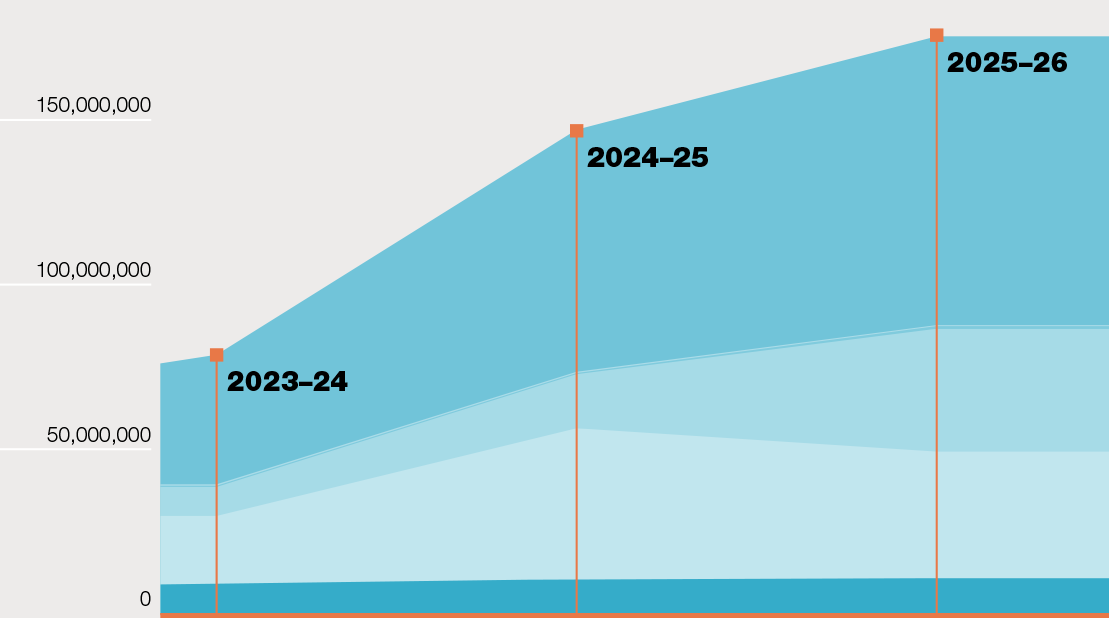
|
2023–24 |
2024–25 |
2025–26 |
|---|---|---|---|
Transactions in large cash transaction reports |
17,869,512 |
20,719,599 |
21,701,608 |
Transactions in electronic funds transfer (EFT) reports |
41,587,294 |
92,013,475 |
76,843,623 |
Transactions in suspicious transaction reports |
17,621,338 |
32,850,345 |
74,636,673 |
Transactions in casino disbursement reports |
751,870 |
714,593 |
1,608,077 |
Transactions in large virtual currency transaction reports |
860,934 |
751,209 |
614,217 |
Total |
78,690,948 |
147,049,221 |
175,404,198 |
Supervisory activities
In 2025–26, FINTRAC undertook 4,874 assessment and monitoring activities across all sectors, including analyzing self-attestations; engaging with businesses in relation to Voluntary Self-declarations of Non-compliance; undertaking Risk Questionnaires; conducting targeted and full-scope examinations; and monitoring action plans.
Over the past year, FINTRAC processed 812 self-attestations, with most targeting mortgage brokers (222), securities dealers (185) and real estate (152). FINTRAC focuses its self-attestations on businesses offering higher-risk products and services, entities in higher-risk locations, businesses that are important because of market share, and entities with no previous compliance history. Self-attestations assist in strengthening FINTRAC's risk insights and identifying higher-risk businesses for more intrusive supervisory activities.
Businesses can inform FINTRAC when they experience instances of non-compliance through a Voluntary Self-declaration of Non-compliance. Promoting open dialogue and transparency allows FINTRAC to work with businesses to quickly and effectively address non-compliance that they have identified. This mechanism also helps to ensure that the Centre receives reporting that it otherwise might not have, information that is critical to the production of actionable financial intelligence for Canada's law enforcement and national security agencies.
In 2025–26, FINTRAC received 294 Voluntary Self-declarations of Non-compliance. Many of these declarations related to late reporting due to human error or systems issues and the remediation of previous non-compliance by recently onboarded sectors. The Centre worked with these entities, including providing guidance when it was required, to ensure that transactions were reported and that non-compliance was addressed.
Over the past year, FINTRAC also administered 984 Risk Questionnaires, the highest number of which were from the following sectors: mortgage brokers (218), securities dealers (215) and real estate (149). The evolution of this questionnaire from a primary risk identification tool to an assessment instrument enables more profound insights and enhanced monitoring of risks, as it compels businesses to provide details on their risks, business model and compliance measures. Information gathered from the Risk Questionnaires allowed FINTRAC to improve its understanding and identification of risk and its risk-based approach in those areas, including the triaging of businesses that were mainly compliant and those that had major gaps in compliance to inform future supervisory activities. Risk Questionnaires were also used to establish baseline profiles in newly onboarded sectors.
FINTRAC undertakes more formal, lengthier examinations to assess the compliance of businesses that report large numbers of transactions or are at a higher risk of being deficient or exploited by money launderers or terrorist financiers. Consistent with its transition from an audit to an assessment approach over the past few years, FINTRAC undertook more complex, lengthy and in-depth examinations of larger businesses in higher risk sectors to determine how effectively they were fulfilling their compliance obligations and mitigating risks.
In September 2025, FINTRAC’s financial intelligence was recognized by the Alberta Securities Commission in relation to an investigation where two individuals have each been charged with seven offences under the Criminal Code, including fraud over $5,000 and laundering the proceeds of crime.
The Centre's examinations can take the shape of a full-scope examination of the entire compliance program of a business or targeted examinations, which are limited to a specific risk or vulnerability or a specific anti-money laundering and anti-terrorist financing control. FINTRAC also conducts follow-up activities, when appropriate, to determine if a business has addressed previous instances of non-compliance. In 2025–26, FINTRAC undertook 625 targeted examinations and information demands, including 433 on money services businesses, 129 on financial entities and 26 on casinos. The Centre also conducted 89 full-scope examinations, most of which were in the following sectors: dealers in precious metals and precious stones (34), real estate (29) and mortgage brokers (9).
FINTRAC has established a process for monitoring the compliance of businesses with their action plan commitments following an examination. The process constitutes ongoing feedback to entities on the actions they take to strengthen their compliance program and address exam findings. An action item is considered closed once the business can demonstrate that it has taken all appropriate corrective measures. The Centre's ongoing engagement with businesses following an examination reinforces positive compliance behaviours and promotes higher rates of compliance during follow-up activities.
FINTRAC also assesses the compliance of businesses through monitoring meetings. These meetings, between the Centre and the compliance team of a business, are used to assess the money laundering and terrorist financing risk profile of a business, as well as the state of its anti-money laundering and anti-terrorist financing program and controls. Monitoring meetings are a quick and effective way to address non-compliance and can lead to action plans and milestones for addressing recognized gaps and deficiencies. FINTRAC holds quarterly monitoring meetings with Canada's largest banks and a major credit union given their very high vulnerability to money laundering and terrorist financing risks.
In September 2025, FINTRAC’s financial intelligence was recognized by the Halton Regional Police Organized Crime Unit in relation to a lengthy investigation into an organized auto theft network operating in the Greater Toronto Area. Project Credit alleged that the accused were operating a sophisticated car theft network and a “chop shop,” dismantling stolen vehicles for parts, re-vinning vehicles, and committing insurance fraud. As a result of this investigation, four individuals are facing nearly 40 criminal charges, including theft of motor vehicles, fraud and possession of property obtained by crime.

Money services business registry
Businesses that exchange foreign currencies, transfer money, cash/sell money orders or traveller's cheques, or deal in virtual currency must register with FINTRAC before offering these services to the public. Moreover, they must renew their registration every two years. A registration with FINTRAC does not indicate an endorsement or licensing of the business. It only means that the business has fulfilled its legal requirement under the Act to register with FINTRAC.
Individuals convicted of certain offences under, among other statutes, the Proceeds of Crime (Money Laundering) and Terrorist Financing Act, the Controlled Drugs and Substances Act or the Criminal Code are ineligible to register a money services business in Canada. Should such a determination be made, the registration is either denied or revoked. Money services businesses are also required to respond in a timely manner to demands for information from FINTRAC or their registrations are revoked.
Given the very high vulnerability rating of money services businesses in the 2025 Assessment of Money Laundering and Terrorist Financing Risks in Canada, FINTRAC focused significant resources on assessing and enforcing compliance in this sector over the past year, particularly in relation to virtual asset service providers. More than 55% of the Centre's total assessment activities were directed at money services businesses, including full-scope examinations on larger, more traditional money services businesses; targeted assessments on crowdfunding platforms and payment service providers; and information demands on high-risk virtual asset service providers.
Revocation of money services businesses registrations

In October 2025, FINTRAC’s financial intelligence was recognized by the Halton Regional Police Service in relation to a lengthy human trafficking investigation. It was alleged that, over the preceding 18 months, an adult female victim was allegedly exploited and trafficked in the sex trade throughout the Greater Toronto Area by the accused for financial gain. As a result of this investigation, one individual was charged with various offences including procuring and laundering the proceeds of crime.
Following FINTRAC's assessment activities, the Centre took aggressive action to address non-compliance with the Act, including illicit cryptocurrency activity across Canada. In 2025–26, FINTRAC revoked the registrations of 82 money services businesses, up from 12 the previous year. To enhance transparency and assist other business sectors with their risk assessments, FINTRAC publishes the names of money services businesses whose registration has been revoked.
In 2025–26, FINTRAC also imposed administrative monetary penalties on nine money services businesses for more than $198 million for a variety of violations, including compliance program deficiencies, failing to register with FINTRAC and failing to report large virtual currency transactions.
In July 2025, FINTRAC imposed an administrative monetary penalty of $19,552,000 on Peken Global Limited (also operating as KuCoin), a foreign money services business operating in Canada, for failing to register with FINTRAC, failing to report large virtual currency transactions on 2,952 separate occasions, and failing to report suspicious transactions on 33 separate occasions, including transactions linked to darknet marketplaces, questionable gambling sites and illegal activities.
Over the past year, FINTRAC also disclosed 28 cases of non-compliance in relation to money services businesses to law enforcement, providing information that would be relevant to investigating or prosecuting criminal non-compliance of the Act.
In September 2025, the RCMP Money Laundering Investigative Team seized more than $56 million in cryptocurrency – the largest crypto seizure in Canadian history. The investigation found that a business involved failed to register with FINTRAC as a money services business. The cryptocurrency exchange platform was dismantled by Canadian law enforcement.
In total, 1,401 new money services businesses registered with FINTRAC in 2025–26 and 625 were renewed. Twenty-three new registrations were denied. In addition, 91 businesses ceased their registrations and 605 registrations expired (including MSB registrations that expired and were subsequently renewed). As of March 31, 2026, there were 3,396 money services businesses registered with the Centre (up from 2,778 in the previous year).
In October 2025, FINTRAC’s financial intelligence was recognized by the RCMP Federal Policing Northwest Region’s Integrated Market Enforcement Team in Calgary. The president of a former Edmonton-based company was alleged to have misappropriated more than $10 million in investor funds, with a portion transferred to cryptocurrency exchanges. The RCMP charged the accused with fraud and laundering the proceeds of crime.
Enforcement
FINTRAC is committed to working with businesses to assist them in understanding and complying with their obligations. However, the Centre is also prepared to take firm action when it is required to ensure that businesses take their responsibilities seriously. This includes imposing administrative monetary penalties when warranted and providing Non-Compliance Disclosures to law enforcement.
To protect Canadians and Canadian businesses, FINTRAC has ramped up its enforcement actions to ensure businesses comply with their anti-money laundering and anti-terrorist financing obligations. These obligations help deter criminals and terrorists from using Canada's financial system to launder the proceeds of their crimes, finance terrorist activities or evade sanctions. They also ensure that FINTRAC receives the information that it needs to generate actionable financial intelligence in support of the investigations of Canada's law enforcement and national security agencies and international allies.
According to Criminal Intelligence Service Canada, there are more than 4,000 organized crime groups operating across Canada. A number of these groups pose a high threat due to their entrenched networks and involvement in numerous types of criminal activities, all of which generate billions of dollars in profits every year. Their pursuit of profit – whether it is from extortion, fraud or drug trafficking – threatens Canadians and Canadian communities.
Organized crime also threatens Canadian businesses. According to a March 2026 KPMG survey, 80% of Canadian businesses polled said they lost between one and five percent of their profits to AI-powered fraud attacks.
To enjoy the financial benefits of their crimes against Canadians and Canadian businesses and expand their illicit infrastructure and networks, organized crime groups must launder their proceeds through Canada's financial system, often by targeting vulnerable business sectors.
Beyond threatening Canadians and Canadian businesses, money laundering undermines the integrity of Canada's financial system and harms Canada's legitimate economy, which Canadian businesses rely upon: it distorts market prices, creates unfair competition and damages the reputation of our financial sector. More broadly, money laundering fosters corruption and leads to the erosion of public institutions and the rule of law, lower government revenues and a loss of credibility internationally.
Terrorists and those supporting terrorism also look to exploit Canada's financial system to facilitate their devastating activities. Whether it is individuals engaged in ideologically motivated violent extremism in Canada, extremist travellers or international terrorist groups, FINTRAC has seen how they move their money to facilitate their terrorist activities.
There has also been a growing nexus between terrorism and transnational organized crime, creating a bond of mutual interest. Terrorists are leveraging organized crime for logistical support and to finance their activities through extortion, kidnapping for ransom and other illegal operations. Last year, Canada listed several transnational organized crime groups as terrorist entities for their involvement in terrorism-related activity.
By complying with their obligations under the Act, businesses play a critical role in supporting Canada's Anti-Money Laundering and Anti-Terrorist Financing Regime and protecting Canadians.
December 2025, FINTRAC’s financial intelligence was recognized by the Canada Border Services Agency in an investigation involving an Ontario business owner who was served a $36.9 million penalty for failing to declare over 2,300 used vehicles exported from Canada.

Administrative monetary penalties
In 2008, FINTRAC received the authority to issue administrative monetary penalties to businesses that are in non-compliance with the Act. Under the legislation, penalties are focused on changing the non-compliant behaviour of businesses. The Centre's administrative monetary penalties program provides a measured and proportionate response to instances of non-compliance.
The Act and associated Regulations establish precise penalty ranges for each violation. Within these ranges, specific penalty amounts are calculated based on FINTRAC's Administrative Monetary Penalties policy. The policy outlines clearly and transparently the method used by FINTRAC to calculate penalties for non-compliance with the Act and associated Regulations.
In 2025–26, FINTRAC issued 35 notices of violation, up 52% from the previous year, for more than $247 million, by far the largest amount in FINTRAC's history. The sectors most penalized in the past year were financial entities (12), money services businesses (8), casinos (5) and real estate (5).
In November 2025, FINTRAC imposed an administrative monetary penalty of $536,853.35 on MP Technology Services Ltd., a subsidiary of MoonPay Inc., which is a foreign money services business operating in Canada. The entity committed four violations, including failing to report suspicious transactions with direct or indirect exposure to darknet marketplaces, sanctioned entities and child sexual abuse material.
|
Number | Amount |
|---|---|---|
2025–26 |
35 |
$247 million |
2024–25 |
23 |
$25 million |
2023–24 |
12 |
$26 million |
2022–23 |
6 |
$1 million |
2021–22 |
15 |
$3.5 million |
With the passage of the Strengthening Canada's Immigration System and Borders Act in March 2026, the Government of Canada increased the size of FINTRAC's penalties by up to 40 times the current amounts. It also provided the Centre with the authority to issue Compliance Orders when businesses fail to address their violations. Failure to comply with these orders can result in a penalty of up to $30 million or 3% of the business's global revenues. FINTRAC is strengthening its administrative monetary penalties framework to implement these significant changes.
In November 2025, FINTRAC’s financial intelligence was recognized by the Alberta Securities Commission in an investigation where an individual allegedly misrepresented their financial position and success as a foreign exchange trader to obtain money from investors. The funds were never returned to investors. As a result of this investigation, one individual was charged with six offences under the Criminal Code, including fraud and uttering a forged document.

Non-compliance disclosures to law enforcement agencies
Under the Proceeds of Crime (Money Laundering) and Terrorist Financing Act, FINTRAC may disclose cases of non-compliance to law enforcement for potential criminal investigation when it is extensive or if there is little expectation of immediate or future compliance. In 2025–26, the Centre disclosed 31 such cases, 28 of which involved money services businesses.
| Numbers | |
|---|---|
| 2025–26 | 31 |
| 2024–25 | 32 |
| 2023–24 | 14 |
| 2022–23 | 10 |
| 2021–22 | 7 |
In June 2025, FINTRAC was recognized in an investigation by the RCMP Northwest Region Federal Policing's Integrated Money Laundering Investigative Team. Two individuals, who owned and operated a money services business, allegedly defrauded several financial institutions by transferring over $40 million into Canada from the United Arab Emirates through a complex network of shell companies and third-party banks accounts. As a result of this investigation, two individuals and one company are facing 29 charges relating to money laundering, fraud and numerous violations of the Proceeds of Crime (Money Laundering) and Terrorist Financing Act, including providing false information to FINTRAC, filing a false compliance report to FINTRAC, failing to keep proper records and failing to verify client identity.
Engagement
FINTRAC engages extensively with businesses and their associations to help them understand and comply with their obligations under the Act and Regulations. The Centre focuses its engagement efforts on sectors that are new to Canada's Anti-Money Laundering and Anti-Terrorist Financing Regime and on changes to the Act and Regulations. In 2025–26, Acquirer services in relation to private automated banking machines, Cheque cashers, Factors, Financing or leasing entities and Title Insurers were newly covered under the Proceeds of Crime (Money Laundering) and Terrorist Financing Act and associated Regulations.
Timely, targeted and thorough guidance
- Delivered 17 targeted guidance initiatives, with a focus on helping new business sectors in meeting their obligations, including mortgage administrators, brokers and lenders; armoured car services; cheque cashing businesses; factoring companies; financing and leasing businesses; title insurers; and acquirer services in relation to automated banking machines
- Produced numerous educational webinars to support businesses in understanding FINTRAC and their legal obligations, including in relation to beneficial ownership, suspicious transaction reporting and sanctions evasion, and the fight against illegal fentanyl financing
- Published guidance and a new reporting form to facilitate the reporting of listed person or entity property to FINTRAC
- Developed guidance on private-to-private information sharing and a model code of practice in consultation with the Office of the Privacy Commissioner of Canada
- Produced guidance to support businesses in consulting Corporations Canada's beneficial ownership registry and in identifying and reporting beneficial ownership discrepancies
- Generated guidance for real estate agents, brokers and sales representatives on when to verify the identity of unrepresented parties and what records must be kept
- Published guidance on using an agent or mandatary to verify the identity of an entity
Outreach
- Created and hosted Industry Days in October 2025 and March 2026 for more than 7,600 business sector representatives and industry stakeholders on key regulatory issues, including suspicious transaction reporting and beneficial ownership discrepancy reporting, and broader national priorities such as following the money to combat extortion and illegal fentanyl and implementing the Ministerial Directive on the Islamic Republic of Iran
- Engaged in quarterly meetings of the Supervision Public-Private Working Group, a key forum for collaboration among public and private sector partners on significant topics, including guidance on regulatory changes, industry best practices for applying legislative and regulatory measures and emerging risks related to money laundering, terrorist financing and sanctions evasion
- Met and consulted with dozens of businesses, individually and through ad hoc Supervision Public-Private Working Group engagements, on a variety of legislative, regulatory and operational issues and priorities
- Participated in 68 meetings with associations from all businesses sectors on legislative and regulatory changes, FINTRAC's supervisory model and priorities and sector-specific issues
- Took part in 105 individual and cross-sector engagements with federal and provincial regulators across Canada to support supervisory coordination, information sharing and the effective operation of Canada's Anti-Money Laundering and Anti-Terrorist Financing Regime
Responses to enquiries
- Responded to 21,958 enquiries, including 5,228 telephone enquiries, from the public and businesses in every reporting sector
- Key issues included access to reporting systems, the registration of money services businesses and regulatory obligations
Memoranda of understanding (MOU)
- Signed MOUs with the Chartered Professional Accountants (CPAs) of British Columbia and Ontario, providing a framework for information exchange and outreach to ensure that CPAs are aware of, and fulfill, their obligations under the Act
- Finalized an MOU with the Alberta Securities Commission, allowing for an exchange of supervisory information between the two regulators to facilitate the execution of their respective mandates
In December 2025, FINTRAC’s financial intelligence was recognized by the Ontario Securities Commission in an investigation into an Ontario sole proprietorship claiming to be in the asset management business. The group allegedly promised that the funds of 28 investors would be placed in individual trading accounts; however, they were instead routed to personal and unrelated third-party accounts. As a result of this investigation, three individuals were charged with fraud over $5,000 and possession of proceeds of crime.
Global leadership
FINTRAC works with its allies and partners in a global effort to combat international money laundering, terrorist financing and sanctions evasion. As a Centre that is recognized for its expertise and global contribution, FINTRAC is regularly asked to lead global conferences and contribute to international research projects, training and bilateral and multilateral capacity building initiatives.
Recognizing the transnational nature of money laundering and terrorist financing, FINTRAC cooperates with foreign financial intelligence units to protect Canadians, Canadian businesses and the integrity of Canada's financial system. Through over 110 bilateral agreements, the Centre can disclose financial intelligence to financial intelligence units worldwide when appropriate thresholds are met. At the same time, foreign intelligence units can share their information with FINTRAC, which broadens the Centre's analyses of international financial transactions.
In 2025–26, FINTRAC provided 225 unique financial intelligence disclosures to foreign financial intelligence units in response to queries and other instigators, such as Voluntary Information Records or Suspicious Transaction Reports. The Centre's disclosures to foreign financial intelligence units contained 85,869 transaction reports, which included a total of 234,420 financial transactions. The disclosures identified 859 subjects. For its part, FINTRAC sent 206 requests to foreign financial intelligence units seeking further financial intelligence to broaden its own analysis.
In recent years, FINTRAC has developed a survey to assess the level of satisfaction among international partners with the Centre's financial intelligence. In 2025–26, this survey focused on 29 foreign financial intelligence units that received at least two financial intelligence disclosures the previous year. The survey's results showed that more than 95% of respondents expressed satisfaction with FINTRAC's disclosures, with more than 94% indicating that the Centre's financial intelligence identified previously unknown information.
Over the past year, as part of the Government of Canada's ongoing commitment to address the overdose crisis, FINTRAC worked closely with the Financial Crimes Enforcement Network (FinCEN) in the United States and the Unidad de Inteligencia Financiera in Mexico through the North American Drug Dialogue Illicit Financing Working Group. This group held several exchanges and collaborated in supporting law enforcement investigations across North America. As part of these interactions, FINTRAC exchanged with its North American counterparts over 20 financial intelligence disclosures related to illegal synthetic opioids. The Centre also joined FinCEN and the Unidad de Inteligencia Financiera in a joint presentation at the ninth meeting of the North American Drug Dialogue in January 2026 in Canada.
In September 2025, FINTRAC and FinCEN co-hosted the second annual FINTRAC–FinCEN Anti-Money Laundering/Anti-Terrorist Financing Symposium in Washington, D.C. The symposium brought together senior officials from the Canadian and United States financial intelligence units, law enforcement, financial sector executives and representatives from Australia and the United Kingdom to collaborate on disrupting the illicit financial activities associated with major security threats in North America. The symposium included discussions on combatting synthetic opioid trafficking; Iran-backed terrorist financing; underground banking systems and real estate linked to Chinese criminal networks; and trends and typologies related to online child sexual exploitation.
FINTRAC is an active member of the Transnational Organized Crime Working Group, which was launched in the summer of 2025 and is co-chaired by FinCEN and the Unidad de Inteligencia Financiera in Mexico. This working group fosters collaboration among global financial intelligence units to combat transnational crime through information sharing, operational support and strategic initiatives. Key topics of focus include corruption, professional money launderers and networks, alternative revenue streams, and the use of emerging financial technology.
In January 2026, as part of a full-day meeting to advance the Canada-Mexico Strategic Security Dialogue, FINTRAC presented on the value of financial intelligence and international cooperation in combatting transnational organized crime. The Canada–Mexico Strategic Security Dialogue is focused on strengthening bilateral cooperation between Canada and Mexico across a spectrum of shared security priorities, including in relation to illegal drugs and firearms trafficking, transnational organized crime, money laundering, cyber security and emergency management. FINTRAC continues to advance and support the actionable commitments that were made under the Dialogue, which was launched in support of the Prime Minister's Comprehensive Strategic Partnership with Mexico in September 2025.
Following the Russian Federation's illegal and unjustified invasion of Ukraine in 2022, FINTRAC worked with Canada's Five Eyes partners and Western European allies to establish the Russia-Related Sanctions and Illicit Finance Financial Intelligence Units Working Group. Over the past year, members continued to work within their respective authorities to surge the sharing of tactical financial intelligence and develop a common base of understanding through the dissemination of strategic-level intelligence on a variety of related issues. For its part, FINTRAC provided 16 unique disclosures to recipients in Canada and foreign jurisdictions, which were primarily focused on potential assets held by sanctioned individuals/entities in Canada and investigations pertaining to illegal exports of dual use goods from or through Canada to suspected Russian end-users in support of Russia's illegal war effort.
In December 2025, FINTRAC’s financial intelligence was recognized in separate—but coordinated—investigations by the Toronto Police Service (TPS) and the RCMP Federal Policing Central Region’s Integrated National Security Enforcement Team. During the TPS investigation, dubbed Project Neapolitan, three individuals were charged with 79 offences related to hate-motivated extremism. TPS investigators also uncovered links to terrorism, prompting a separate—but parallel—RCMP investigation. This led the RCMP to lay terrorism-related charges, including terrorist activity financing, against one individual.

In June 2025, FINTRAC's financial intelligence was recognized by the RCMP in an investigation where a Canadian businessman was arrested for allegedly violating Canadian sanctions that prohibit technology trade and exports to Russia. Following the three-year investigation, the individual is facing numerous charges for sanctions evasion under the Special Economic Measures Act and the Special Economic Measures (Russia) Regulations.
Throughout 2025–26, FINTRAC continued to collaborate with its international partners on the Counter-Terrorism Financing Taskforce (CTFT). This taskforce is comprised of a global coalition of financial intelligence units committed to disrupting international financial support for Iran-backed terrorist groups through the sharing of financial intelligence, strengthening of cross-border partnerships, and supporting domestic law enforcement investigations in respective jurisdictions. Over the past year, FINTRAC generated four unique disclosures related to the work of the CTFT.
In November 2025, FINTRAC's previous Director and CEO presented at the G7 Interior and Security Ministers' Meeting in Ottawa, as part of Canada's G7 Presidency, on recent developments in the tracking of illicit financial flows, including in relation to migrant smuggling. This supported a discussion on leveraging financial intelligence through innovative solutions and included next steps for advancing financial intelligence coordination and information sharing to more effectively target those engaged in international migrant smuggling.
FINTRAC is an active member of the Egmont Group, which is comprised of more than 180 financial intelligence units worldwide. As part of its contribution to the group, the Centre has led or participated in numerous projects, including the development of typologies and policies. In addition, FINTRAC has delivered technical assistance, training and knowledge exchanges with various FIU members of the Egmont Group on a variety of topics of interest.
FINTRAC's previous Director and CEO successfully concluded her second term as the Chair of the Egmont Information Exchange Working Group (IEWG) and member of the Egmont Committee in July 2025. This group is focused on improving cooperation and information sharing among financial intelligence units by identifying new trends and methods related to money laundering and terrorist financing; sharing best practices and expertise among financial intelligence units; and seeking new and innovative ways to develop and share financial intelligence. During the previous Director's four-year tenure as Chair of IEWG, the Working Group delivered 25 projects that provide practical and impactful tools to financial intelligence units around the world in the fight against money laundering, terrorist financing and sanctions evasion. The Working Group also strengthened its relationship with other Egmont Working Groups through joint sessions, as well as with strategic partners such as the Financial Action Task Force (FATF), INTERPOL, the United Nations Office on Drugs and Crime and the International Monetary Fund through 11 joint projects. In addition to her IEWG-related work related, FINTRAC's previous Director and CEO led the successful implementation of the FIU Operational Independence and Autonomy Project.
FINTRAC's previous Director and CEO also created the Women's Head of FIU series as a forum for members to exchange insights related to challenges of being women leaders, particularly within an international context, and to celebrate their successes. This series provides an accessible and supportive system for women leading financial intelligence units to collaborate and encourage productive and relevant dialogue. In 2025–26, FINTRAC's previous Director organized and hosted three Women's Head of FIUs events, two of which coincided with Egmont meetings in Luxembourg and Tanzania and a virtual event to celebrate International Women's Day, which included the heads of FIUs Nigeria and Sweden and the President of the FATF.
FINTRAC is also a member of Canada's delegation to the FATF, an international body that sets standards and promotes the effective implementation of legal, regulatory and operational measures for combatting money laundering and terrorist financing. In 2025–26, the Centre contributed to the review of eight mutual evaluations and follow-up reports. FINTRAC also provided comprehensive support throughout the year in relation to the FATF Mutual Evaluation of Canada's broader Anti-Money Laundering and Anti-Terrorist Financing Regime.
Over the past year, FINTRAC contributed to numerous FATF policy and research initiatives, including on virtual assets, asset recovery, beneficial ownership and other emerging issues to strengthen international efforts to combat money laundering and terrorist financing. The Centre also participated as project team member on the FATF Risks, Trends and Methods Working Group's (RTMG) projects on Stablecoins and Unhosted Wallets, and Cyber Enabled Fraud. In recognition of Canada's expertise, a FINTRAC official was selected to Co-Chair the RTMG for the next two years to advance the international community's understanding of money laundering and terrorist financing.
FINTRAC also continued to support Canada's international efforts to improve anti-money laundering and anti-terrorist financing regimes around the world through its active and ongoing contributions to the work of FATF-Style Regional bodies, including the Caribbean Financial Action Task Force (CFATF) and the Asia/Pacific Group (APG) on Money Laundering.
In February 2026, FINTRAC’s financial intelligence was recognized by the RCMP’s Integrated Market Enforcement Team in Toronto in relation to an investigation of a syndicated mortgage investment fraud. This multi-year investigation found that almost 800 investors were defrauded. Two individuals were charged with fraud and each ordered to pay $12.2 million in restitution.
FINTRAC's international
engagement at a glance

International Financial Action Strike Team (IFAST)
- FINTRAC is a member of the International Financial Action Strike Team along with its Five Eyes FIU partners
- Created to deepen the use of financial intelligence to combat priority financial crimes by bringing together subject matter experts to discuss specific operational files and propose coordinated operational approaches
- Met regularly to support tactical financial intelligence efforts in support of critical money laundering investigations
- Generated two financial intelligence disclosures in support of IFAST efforts

UN Office on Drugs and Crime (UNODC)
- Delivered two presentations at the launch of the UNODC's Global Financial Institutions Against Drugs initiative in Vienna, Austria, attended by 59 countries – one on FINTRAC's contribution to combating synthetic opioid trafficking through financial intelligence, and a joint presentation with CIBC showcasing Project Guardian as a public-private partnership model to combat synthetic opioids internationally
- Joined the Department of Finance Canada in meetings with the UNODC Terrorism Prevention Branch in May and November 2025 to discuss capacity building support and technical assistance in relation to UNODC projects
- Contributed to the joint Global Affairs Canada – UNODC led project on 'Combatting International Financing of Synthetic Drug Markets: UNODC Synthetic Drug Strategy' launched in March 2026, which is focussed on disrupting the synthetic opioid chain across the globe

Europol Financial Intelligence Public Private Partnership
- Co-authored a bulletin on illegal, unreported and unregulated fishing, which supports FIUs globally in recognizing financial transactions suspected of being related to these crimes and the laundering of the associated funds
- Co-hosted five expert speaker series presentations to support awareness and understanding of illegal wildlife trade and environmental crimes more broadly among Europol Financial Intelligence Public Private Partnership community members
- Co-hosted a workshop, as part of the Europol Financial Intelligence Public Private Partnership, at the Egmont Group plenary in December 2025, highlighting environmental crime as a revenue stream for criminal organizations

International Supervisory Forum
- Served as Chair of the International Supervisory Forum in 2025–26
- Organized and led two supervisory forum events, helping to guide the work of the group and share information and best practices with its Five Eyes partners in relation to its compliance program and activities

Joint Chiefs of Global Tax Enforcement
- Created by tax enforcement authorities from Australia, Canada, the Netherlands, the United Kingdom and the United States to increase collaboration in the fight against international tax crime and money laundering
- Along with financial intelligence units from each country, FINTRAC participated in the 2025 Cyber Challenge, which generated dozens of leads, with a particular focus on crypto assets, for tax authorities and law enforcement agencies to investigate
- Worked side-by-side with global partners to share intelligence, refine investigative approaches and processes, and strengthen cross-border coordination
- Actively participated in the Canada Revenue Agency-led Canadian Financial Partnership (CFP), a domestic public-private partnership with Canada's major financial institutions, the Canadian Bankers Association and FINTRAC, which collaborates and shares strategic information to combat tax evasion and money laundering
- Participated in regular CFP meetings and co-delivered a workshop on money laundering and tax evasion indicators with the Canada Revenue Agency
Enhancing awareness of money laundering, terrorist financing and sanctions evasion
FINTRAC produces valuable strategic intelligence in the fight against money laundering, terrorist financing and sanctions evasion. Through the use of research and analytical techniques, the Centre is able to identify emerging characteristics, trends and tactics used by criminals to launder money, fund terrorist activities and evade sanctions.
The goal of FINTRAC's strategic intelligence is to inform Canada's security and intelligence community, regime partners and policy decision-makers, businesses, Canadians, and international counterparts about the nature and extent of money laundering, terrorist financing and sanctions evasion in Canada and throughout the world. FINTRAC also produces strategic financial intelligence relevant to threats to the security of Canada.
Over the past year, the Centre generated 17 strategic financial intelligence assessments, reports and targeted indicator profiles on a range of specific money laundering, terrorist financing and sanctions evasion trends, typologies and mechanisms to improve the detection, prevention and deterrence of these activities. These assessments, reports and profiles covered key priority areas, including money laundering associated with extortion, illegal fentanyl, online child sexual exploitation and transnational organized crime, sanctions evasion, terrorist activity financing and threats to the security of Canada. While many of these assessments and reports are classified, FINTRAC closely monitors a number of key themes and risks that can be shared publicly.
In support of the Countering Extortion Partnership launched by Canada's Minister of Finance and National Revenue in February 2026, FINTRAC engaged with 25 major financial institutions, such as banks and credit unions, to develop and disseminate a new strategic product: the Targeted Indicator Profile or TIP. These TIPs included tailored indicators and strategic intelligence to assist businesses in identifying, mitigating and reporting transactions associated with extortion. In March 2026, the Centre also shared financial intelligence insights and methodologies related to extortion with more than 4,000 representatives of businesses at FINTRAC's Industry Day.
FINTRAC developed, and subsequently published in April 2026, a Special Bulletin on money laundering associated with extortion directed at Canada's South Asian diaspora. The special bulletin provided insights into the financial activities related to extortion and targeted violence directed at Canada's South Asian diaspora communities across the country, particularly in Ontario, British Columbia, Alberta and Manitoba. It highlighted that extortion targeting South Asian communities in Canada had evolved from sporadic threats into a sustained campaign of coercion that blends intimidation, opportunistic violence, and transprovincial coordination. It also indicated that the extortion targeting Canada's South Asian diaspora, along with the associated money laundering activities, appeared to be primarily associated to loosely organized criminal networks blending local actors with individuals claiming affiliation to overseas organized crime groups.
The special bulletin was shared with businesses to help them identify and assess money laundering risks, apply controls and measures to mitigate these risks, and detect and report suspicious transactions to FINTRAC. With the reporting that it receives from businesses, the Centre has generated significant financial intelligence in support of the extortion investigations of law enforcement agencies across Canada, helping them to target, disrupt and dismantle the organized criminal networks that profit from this insidious illicit activity and threaten the safety of Canadians, Canadian businesses and Canadian communities.
In November 2025, FINTRAC published an Operational Alert, Laundering the proceeds of online child sexual exploitation, aimed at combatting online child sexual exploitation. The operational alert noted that these heinous crimes continue to rise globally year after year, not only in the number of confirmed reports showing child sexual abuse images, but also in the severity of the images and videos. The Centre also highlighted an increase in financially motivated offending, including sexual extortion cases, which often have links to organized crime.
This operational alert is assisting businesses in identifying and reporting financial transactions associated with these horrendous crimes targeting vulnerable children. By following the money, FINTRAC is able to generate actionable financial intelligence that supports law enforcement in Canada and internationally in identifying and targeting the perpetrators of these terrible crimes.
The new operational alert built on FINTRAC's previous strategic intelligence, which was published in December 2020, and reflected new developments and indicators that were identified after analyzing FINTRAC's financial intelligence. Taken together, the Centre's strategic intelligence supports Project Shadow, an international public-private partnership established to target money laundering linked to online child sexual exploitation. Project Shadow is co-led by Scotiabank and the Canadian Centre for Child Protection, and includes international financial intelligence units, law enforcement agencies and private sector partners.
In July 2025, FINTRAC published a Special Bulletin on financial activity associated with evasion of counter proliferation sanctions, which provided contextual information, characteristics and indicators relevant to financial activity associated with the evasion of counter proliferation sanctions. Proliferation financing is defined as the raising, moving, or making available funds, assets or economic resources to individuals or entities for the proliferation of weapons of mass destruction. This includes the proliferation of their means of delivery or related material, including both dual-use technologies and dual-use goods for non-legitimate purposes.
The special bulletin identified Canada as a source of the goods, technology, information and expertise that proliferators may seek. At the same time, the illicit networks that procure these goods and provide the necessary financial support pose a threat to Canada's economic and national security interests and to global security.
The special bulletin found that proliferation financiers and their networks use various techniques to facilitate their illicit activities, including raising funds to finance the programs to develop weapons of mass destruction, disguising and transferring funds to support the purchase of related materials, and using those funds to procure proliferation-related goods and technologies through international financial and trade systems. As proliferation activities depend on access to funds and financial services to procure, transport and receive illicit goods from across the world, disrupting their financing is essential to halting the spread of weapons of mass destruction.
Businesses may have visibility into various aspects of export-related financial activities that are undertaken to evade proliferation-related sanctions. The special bulletin highlighted that transaction monitoring, sanctions screening and thorough customer due diligence efforts are crucial tools to combat the evasion of counter proliferation sanctions.
In March 2026, FINTRAC’s financial intelligence was recognized by the Durham Regional Police Service Financial Crimes Unit in a complex, long-term fraud investigation after an employee allegedly defrauded a Durham Region business of more than $3 million. The investigation revealed extensive money laundering activity, including the use of cheque cashing businesses, activity at multiple financial institutions, and the movement of funds across Durham Region, the Greater Toronto Area and globally.

Protecting personal information
In fulfilling its core financial intelligence and supervisory mandates, FINTRAC is committed to safeguarding the information that it receives and discloses to Canada's law enforcement and national security agencies. The Proceeds of Crime (Money Laundering) and Terrorist Financing Act strikes a careful balance between the Centre's receipt and disclosure of personal information to support essential criminal and national security investigations and the rights of Canadians to be protected from unnecessary invasions of their privacy.
Safeguarding personal information is critical to FINTRAC. Its governing legislation sets out clear principles for protecting privacy, including strict limitations on information that can be received and disclosed, clear requirements for maintaining and disposing of records, and a biennial audit of FINTRAC's protection of information by the Office of the Privacy Commissioner. These principles are reinforced by the Centre's own operational policies and security measures.
FINTRAC does not have direct access to the bank accounts or any other financial information of Canadians. The Centre receives information from businesses only as specified under the Act. The legislation also establishes that FINTRAC can only make a financial intelligence disclosure to appropriate police and prescribed law enforcement and national security agencies. Furthermore, the Act clearly defines what information may be disclosed and sets out specific thresholds that must be met before the Centre can disclose it. Any other disclosure or improper use of information is prohibited and can result in severe penalties, including a fine of up to $500,000 and/or up to five years' imprisonment.
To protect the reports that it receives from Canadian businesses, FINTRAC's premises and information systems are guarded by multi-layered and integrated security systems. All personnel must maintain a high-level enhanced security screening as a condition of employment. As well, employees have access to sensitive information on a need-to-know basis only and are reminded regularly of their responsibilities to protect personal information. The Centre's Code of Conduct, Values and Ethics reinforces employees' legal obligations in relation to safeguarding information.
FINTRAC is the only federal agency whose governing legislation requires a biennial audit by the Office of the Privacy Commissioner on the measures it takes to safeguard the personal information that it receives and collects under the Act. The Office of the Privacy Commissioner initiated its sixth review of FINTRAC's privacy protection measures in 2025–26. A final report is expected in the year ahead and the Centre will take action, as appropriate, in response to the recommendations identified.
The protection of privacy is a clear priority and a critical result of FINTRAC's work. While helping to protect the safety of Canadians and security of Canada's economy, the Centre is determined to meet its obligations under the Privacy Act and the Proceeds of Crime (Money Laundering) and Terrorist Financing Act.
FINTRAC's resources at a glance
As FINTRAC's responsibilities continue to grow in scope and complexity, its ability to deliver on its mandate is tied directly to its adaptability, the skills and dedication of its employees, and the tools and resources that it provides them to do their work. Through its excellence in people management, the Centre continues to attract, develop, retain and maximize the contributions of one of the most dedicated and talented workforces in the federal government.
FINTRAC employees
| Designated group representation | FINTRAC employees | Workforce availability | Federal public service |
|---|---|---|---|
Women |
62.2% |
58.4% |
56.8% |
Visible minorities |
28.1% |
20.2% |
23.9% |
Persons with disabilities |
10.8% |
8.5% |
9.0% |
Indigenous peoples |
1.3% |
2.5% |
5.5% |
| Official languages representation | FINTRAC employees | Canadian population | Federal public service |
First official language – English |
65.8% |
76.1% |
69.9% |
First official language – French |
34.2% |
22.0% |
30.1% |
FINTRAC budget
FINTRAC's resources are managed on the basis of effective policies and planning, reliable financial and non-financial information and sound analysis.
| 2023–24 (in millions) |
2024–25 (in millions) |
2025–26 (in millions) |
|
|---|---|---|---|
Salaries |
$65 |
$65.9 |
$75.2 |
Employee benefit plans |
$9.2 |
$11.3 |
$4.1 |
Operations and maintenance |
$45.7 |
$46.1 |
$45.5 |
Total approved budgetFootnote3 |
$120 |
$123.2 |
$124.8 |
Annex A: Financial transaction reports
In 2025–26, FINTRAC received a total of 17,758,142 financial transaction reports from businesses. The decline in transaction reports from previous years is the result of the implementation of a new, more efficient reporting system that allows for the submission of numerous transactions in each report. The number of financial transactions reported to FINTRAC over the past three years has increased by more than 122%.
Large cash transaction reports
- 2025–26 3,004,427
- 2024–25 2,898,347
- 2023–24 6,203,220
A large cash transaction report is submitted to FINTRAC when a business receives $10,000 or more in cash in the course of a single transaction, or when it receives two or more cash amounts totalling $10,000 or more made within a consecutive 24-hour window, and when the business knows the transactions were conducted by the same person or entity; were conducted on behalf of the same person or entity (third party); or are for the same beneficiary.
Electronic funds transfer reports
- 2025–26 13,520,675
- 2024–25 61,170,154
- 2023–24 41,587,294
An electronic funds transfer report is submitted to FINTRAC upon the transmission of instructions for the transfer of $10,000 or more out of or into Canada in a single transaction, or in two or more transactions totalling $10,000 or more made within 24 consecutive hours, through any electronic, magnetic or optical device, telephone instrument or computer, and when the business knows the transactions were conducted by the same person or entity; were conducted on behalf of the same person or entity (third party); or are for the same beneficiary.
Suspicious transaction reports
- 2025–26 653,835
- 2024–25 633,882
- 2023–24 631,137
A suspicious transaction report is submitted to FINTRAC in respect of a financial transaction that occurs or is attempted, and for which there are reasonable grounds to suspect that the transaction is related to the commission or attempted commission of a money laundering or terrorist activity financing offence. Unlike other reporting obligations, there is no monetary threshold associated with the reporting of a suspicious transaction.
Cross-border currency reports/cross-border seizure reports
- 2025–26 27,443
- 2024–25 10,270
- 2023–24 38,967
A cross-border currency report is filed with the Canada Border Services Agency by a person entering or leaving Canada carrying a sum of currency or monetary instruments of $10,000 or more, or by a person mailing or sending such large sums into or out of Canada. The CBSA then submits the report to FINTRAC. A cross-border seizure report is submitted to FINTRAC by a CBSA officer upon the seizure of cash or monetary instruments.
Casino disbursement reports
- 2025–26 413,252
- 2024–25 263,568
- 2023–24 292,350
A casino disbursement report is submitted to FINTRAC when a casino makes a disbursement of $10,000 or more in the course of a single transaction, or in the course of two or more transactions totalling $10,000 or more within 24 consecutive hours, received by the same individual or entity; received on behalf of the same person or entity (third party); or are for the same beneficiary. This report is not limited to cash disbursements.
Large virtual currency transaction reports
- 2025–26 138,510
- 2024–25 137,105
- 2023–24 86,405
A large virtual currency transaction report is submitted to FINTRAC when a business receives virtual currency in an amount equivalent to $10,000 or more in a single transaction, or when a business receives two or more amounts of virtual currency that total $10,000 or more within a consecutive 24-hour window, and when the business knows the transactions were conducted by the same person or entity; were conducted on behalf of the same person or entity (third party); or are for the same beneficiary.
Financial Transactions and
Reports Analysis Centre of Canada
234 Laurier Avenue West
Ottawa, Ontario K1P 1H7 Canada
Telephone: 1-866-346-8722
© His Majesty the King in Right of Canada, 2026.
ISSN: 1910-9415
Cat. Nº: FD1E-PDF
- Date Modified: